Publications
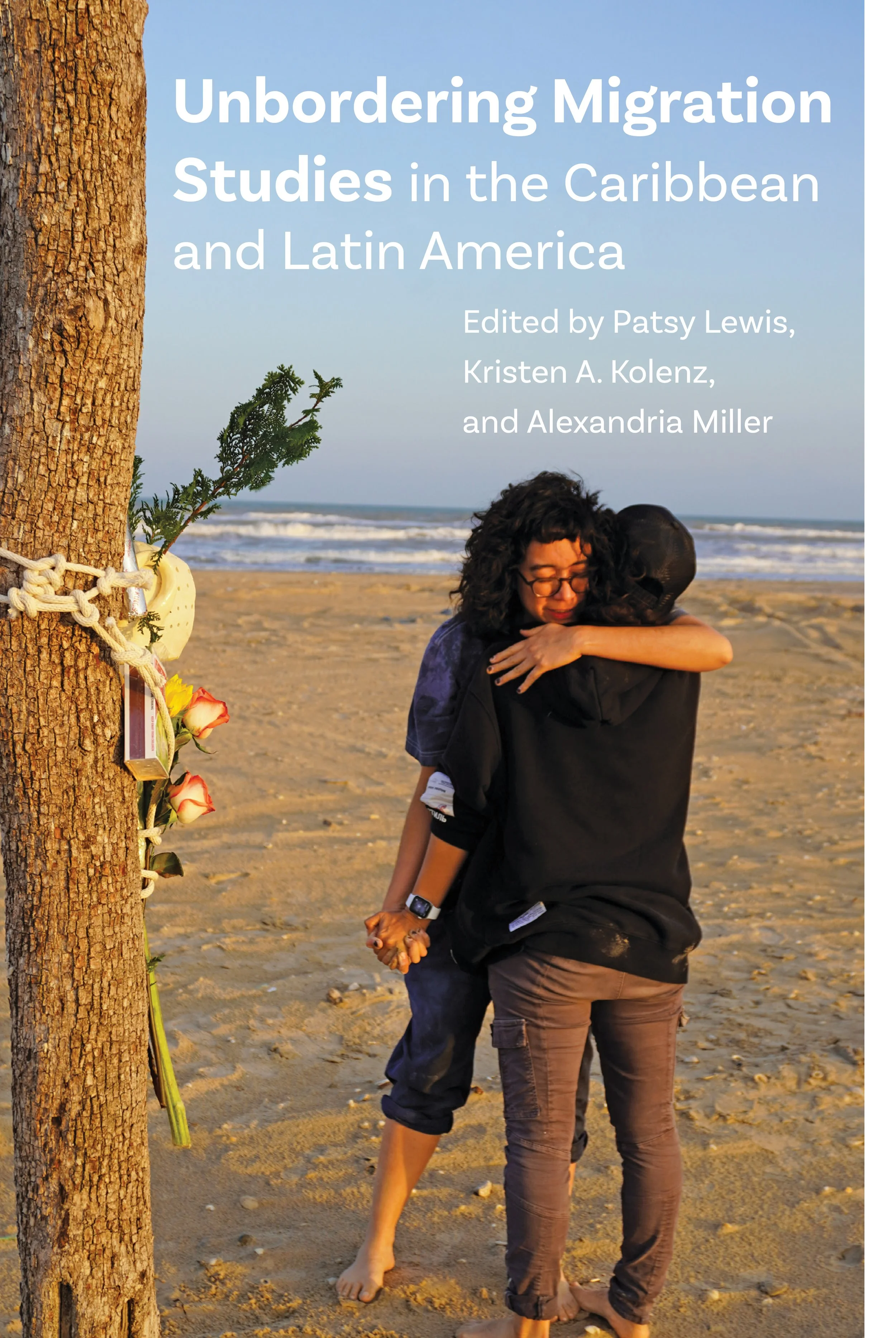
Unbordering Migration Studies in the Caribbean and Latin America brings together scholars and artists across regions, generations, disciplines, and modes of expression to decenter the US-Mexico border as both a site and a concept. Calling for renewed attention to the spaces, identities, and conflicts that remain understudied and excluded from our hemispheric knowledge of forced movement, the volume reveals a wider diversity of migratory realities and considers race, ethnicity, and class beyond the hegemonic formations that eclipse non-US histories. Through multidisciplinary and geographically expansive essays that draw from history, social anthropology, environmental studies, feminist studies, and lived experience, the volume examines diverse migratory flows from Chile and Argentina in the South to Georgia and New York in the North. Individually and collectively, the essays remap migratory movements other than through the most studied South-to-North trajectories and remove the US and US-based racial formations from the center of analysis.
When people think of the Caribbean, they think of lush beaches, drinks with umbrellas, and “no worries mon.” Tell your friends you’re visiting Jamaica or any other Caribbean island, and they’ll either fawn in excitement or warn you about how dangerous it is. Oftentimes, people visit the region without considering the rich and vibrant culture created by its people besides tourism–its complex history and activism, the developments of entrepreneurship, entertainment, present-day social issues, and how the Caribbean diaspora impacts the trends that arise from the region. When outsiders hear the word “Caribbean,” they might only think of the region’s location; they might never consider that the Caribbean is not only a geographical area but it is also an identity that extends beyond the region and into its large diaspora that, as we later outline in this chapter, has been espoused by generations of movements and migrations
This article investigates the role of contemporary women in reggae music and details the unexpectedness of their growing role in the current industry, given their relative absence since the 1970s. Through critical studies of singers Janine “Jah9” Cunningham and Kelissa [McDonald], I historicize the evolution of female songstresses and their contributions to changing the rhetoric around women’s positionalities in music and their relationship to Caribbean feminisms. Using an interdisciplinary framework that incorporates an intersectional lens with focuses on race, gender, and class, I analyze song lyrics and visual imagery that illuminate Caribbean womanhood. By critically analyzing music lyrics and videos of this movement, this essay builds on Jamaica’s far-reaching history of Black resistance and highlights Jamaican twenty-first-century conversations about anti-imperialism, Rastafari, Afrocentricity, and poverty within Black feminism and women’s empowerment. Lastly, I theorize concerning these women’s cultural contributions as intellectual property, helping to shape the Black radical tradition through music and politics.
This essay explores white masculinity and the recuperation of privilege in the figure of Sturgill Simpson, an American country music singer from Jackson, Kentucky. Operating at the intersection of country music studies and third wave whiteness studies, it demonstrates how Simpson deploys the outsider identity of the industry outlaw to recuperate insider benefits of critical acclaim, commercial success, and creative license. As an artist who makes country music for “people who don't like country music,” Simpson functions as a representative figure of the adaptive tactics of white masculinity and the broader politics of inclusion and exclusion in contemporary country music.